Student Engagement Strategies That Actually Keep a Class Involved
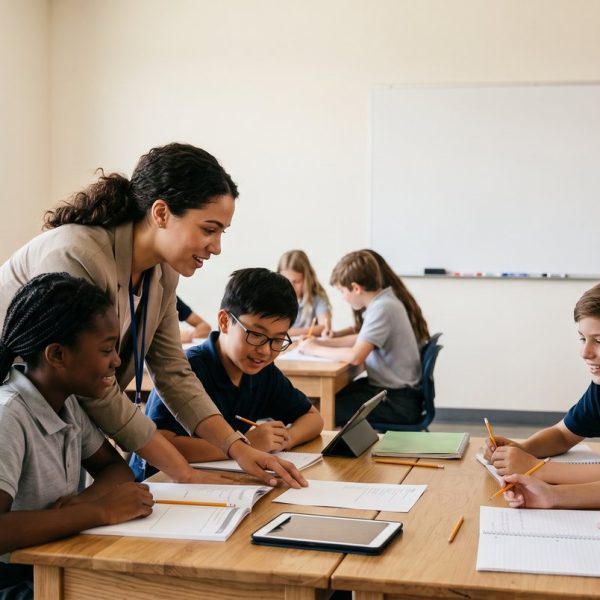
Every teacher knows the difference between a room that is merely quiet and a room that is genuinely switched on. One is compliance, the other is attention, and only the second one leads to learning. That gap is why student engagement strategies matter so much, especially for newer teachers who have mastered the lesson content but are still working out how to keep thirty different minds interested at the same time. The good news is that engagement is not a personality trait some teachers are born with. It is a set of habits anyone can build, and it improves with practice like any other part of the craft.
What Student Engagement Really Means
It helps to be clear about what is student engagement before trying to improve it. Engagement is not just hands in the air or heads nodding along. Real student engagement has three layers working together, the behavioural side of taking part, the emotional side of caring about the work, and the cognitive side of actually thinking hard about it. A class can look busy while barely thinking, and a quiet class can be deep in thought. The aim is to reach all three layers, not just the one you can see from the front of the room.
Start With Relationships, Not Rules
Students give their attention to teachers they trust. Learning a few things about who your students are outside your subject, greeting them at the door, and showing that you notice when someone is having an off day all pay off far more than any clever gimmick. When a student feels seen, they are far more willing to take the small risks that learning requires, like answering a hard question or admitting they are lost. Nothing else on this list works well until that foundation is in place.
Students learn best from teachers they trust and respect. When teachers use intimidation or humiliation to control a classroom, it destroys the relationship and shuts down learning. Building genuine connections requires patience, empathy, and consistent kindness. Classrooms thrive when they are free from teacher bullying.
Student Engagement Strategies That Work in Any Classroom
Once the relationship is there, the practical moves are surprisingly simple. Ask questions and then wait, giving real thinking time instead of rushing to the first raised hand. Build in short bursts of active work, a quick discussion with a partner, a problem to solve, a vote, a bit of movement, so students are producing rather than just receiving. Offer genuine choice where you can, whether in how they show their understanding or which example they tackle first. These student engagement strategies work because they shift the mental effort onto the learner, which is exactly where learning happens.
Make the Work Feel Relevant
Attention follows meaning. When students can see why something matters, whether it connects to their lives, a current event, or a question they already care about, they lean in without being asked. You do not need to turn every lesson into entertainment. A single honest sentence explaining why a topic is worth their time often does more than an elaborate activity. Relevance also buys patience, since students will push through a difficult stretch when they trust it leads somewhere worthwhile. The best way to learn how to engage students is to keep asking, from their point of view, the simple question of why they should care.
Watch for the Early Signs of Disengagement
Engagement rarely collapses all at once. It leaks away in small signals, the glazed look, the phone that keeps reappearing, the student who stops asking questions. Training yourself to spot these early is half the battle, because a quick change of pace, a targeted question, or a two-minute stretch can often pull a class back before it drifts too far. Scanning the room while you teach, rather than fixing your eyes on your notes or the board, gives you the information you need to adjust in real time. Naming a dip privately and without blame, instead of calling it out in front of everyone, usually keeps the student on your side.
Student engagement improves when a session has a clear shape, because attention follows structure far more reliably than it follows enthusiasm. Hospitality worked this out long ago and builds its most popular offerings around a predictable rhythm. The sustained popularity of brunch in dubai owes a great deal to that structure, since guests know exactly how the next four hours will unfold.
Engagement strategies often overlook the physical conditions of a classroom or study session. Attention is affected by hydration, warmth and the small rituals that mark a change of activity. Something as ordinary as making herbal tea between tasks works as a reset signal, particularly for longer sessions.
Keep Every Student Involved, Including Those Still Learning the Language
Engagement stalls fast for students who cannot fully follow the words. Classrooms are more multilingual than ever, and a learner who is still building their English will disengage not from boredom but from being lost. Pairing new vocabulary with visuals, giving instructions in more than one form, and supporting language access for families all help these students stay in the room and in the lesson. Inclusion is not separate from engagement, it is part of it.
Turn Engagement Into Real Learning
Engagement is the means, not the end. The point is to convert that attention into understanding that lasts, which is why it helps to connect classroom energy with the habits students use on their own, showing them how to study effectively once the lesson is over. If you want to go deeper, the research summarised in the overview of student engagement is a useful starting point, and teacher communities like r/Teachers are full of real classroom examples worth borrowing. Build the relationships first, keep the thinking active, make the work matter, and engagement stops being something you chase and becomes the normal weather of your classroom.